
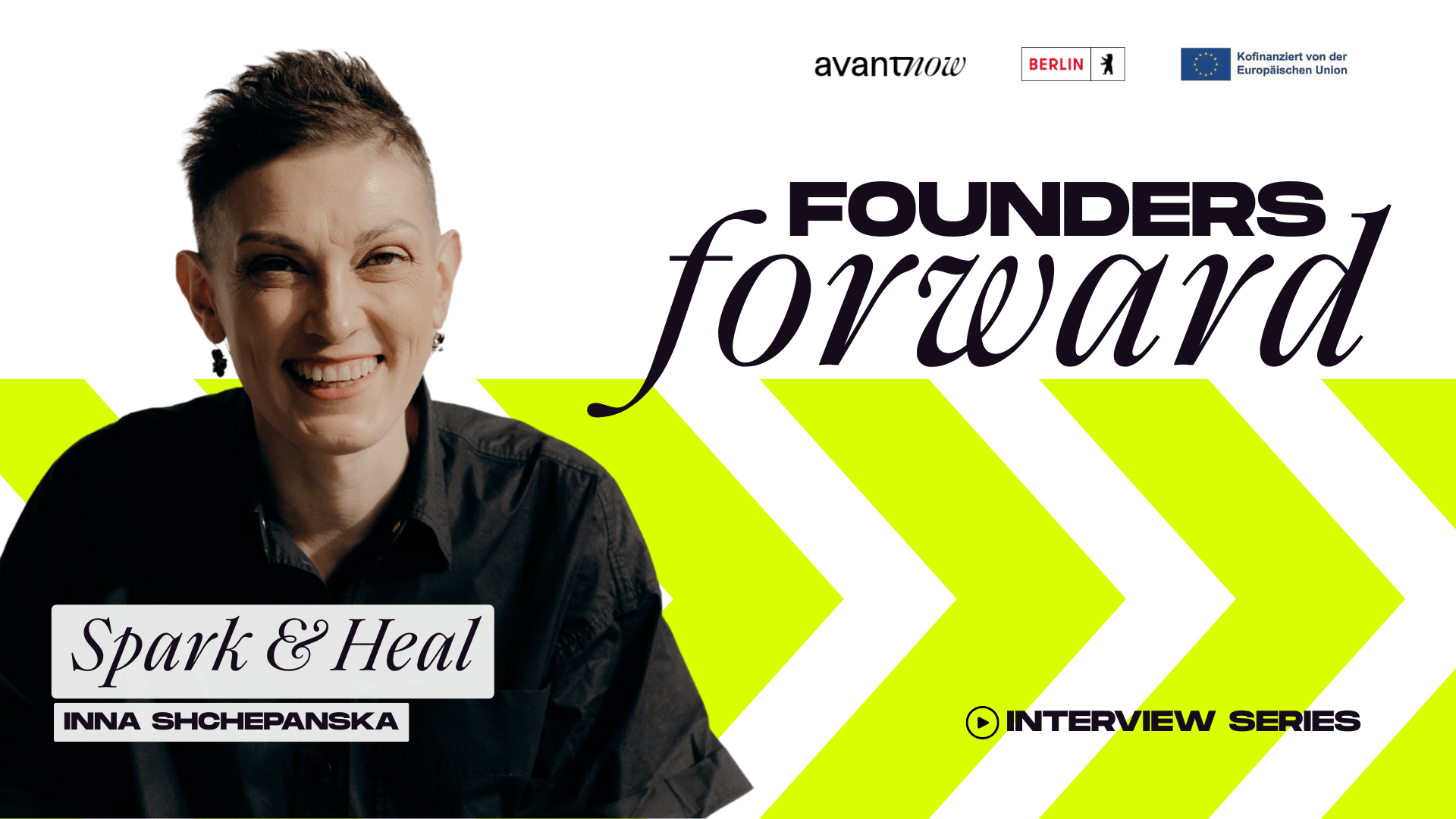
In this series, we step away from slide decks and sprint boards to learn how early-stage builders wrestle with doubt, pivots, and the long game of impact.
Seasoned YouTuber, and breast-cancer survivor, Inna Shchepanska is turning her toughest battle into an AI-guided, community-driven platform that helps women thrive after treatment ends. In this rapid-fire interview she unpacks the “hidden crisis” of survivorship, the tech behind Spark & Heal, and why post-cancer care must embrace mental health, relationships, and self-image—not just scar tissue.
What made you want to have an impact in breast-cancer survivorship?
Yourself. I’m ina a woman, world citizen, failed diplomat and, um, entrepreneur. Sweet. The simple answer, because I care about this cause since my mom used to have breast cancer and I’m myself, a breast cancer survivor, uh, but not every breast cancer survivor takes the entrepreneurship route.
Actually, the first bigger action for me was a webinar about dating for women after breast cancer. I felt so elated. I felt so high! I felt like what I did had impact on the actual day-to-day life of women. So that’s how this startup thing naturally grabbed me.
Biggest “oh sh*t” moment?
It’s something not directly connected to my startup, but to communication. I forgot about the different vous in French and addressed a potential partner like a friend—very casual. His answer came swiftly, very formal, and he dismissed collaboration.
Small moments that keep you going?
This happens almost every day when I interact with people outside of my bubble, because obviously every day I talk with people who help me build my startup, my advisors, my friends … and I don’t see the the end in this tunnel.
Whenever I tell my story and I talk about the vision and the mission of what I’m building, every one of them says, “wow, this is great, because the traditional medical system doesn’t have time and resource to do what you do, but what you are bringing is actually valuable.
We know that we need it, but nobody does it or maybe very few people do it.” And so this little validations keep me going.
What about advice you would have loved to receive earlier?
Start my entrepreneurship journey earlier! Yeah, it’s not even to be your own boss. In my current situation as a founder, I juggle between so many different tasks and I use so many different skills, and I also grow new skills, and then I feel even every week when I look back from Friday to Monday – I’m like, wow, I have learned something!
If this doesn’t work, I could be, I don’t know, giving lectures on tools for startup. Or regarding public speaking, I have improved tremendously. Because I’m doing pitches, because I also have the YouTube channel on the side.
So there are many, many opportunities here and I got so many connections in this cancer scene that I could probably do something new within this topic. So the future is brighter than ever.
Startup myth you’d like to debunk?
”Every entrepreneur is born as a natural entrepreneur.” Listen, nobody is born to be anything. Everything that we become comes from work, continuous improvement, small incremental changes that happen with us every day. So that’s the biggest misconception that I would like to dispel. And I want to encourage everyone, regardless, age, profession, social status, religion, sexuality, color of your eyes, to become who you want to become!
Most over-used buzzword right now?
AI! Scroll any tech newsletter and you see AI five or six times per square centimetre.
What’s your super-power as a founder?
My superpower as a founder is being empathetic and connecting with people. Because of that, I have extended my network by far more than I expected from the beginning, and that’s how also people know me.
One piece of advice for aspiring founders?
If I had to give an advice about funding to aspiring founders or to early stage founders, I would say: Try to diversify your funding as much as possible without falling into VC money without being ready.
So my personal take on this: I’m trying to bootstrap as much as I can. In parallel to that, I’m looking around for different public funding, which can come from your city, from your region, from your country, or from the EU level. Maybe this will change when my startup grows and is at a different stage of its growth.
But currently, that’s my strategy fund raising. First of all, bootstrapping, fundraising, and small VC and angel money.